
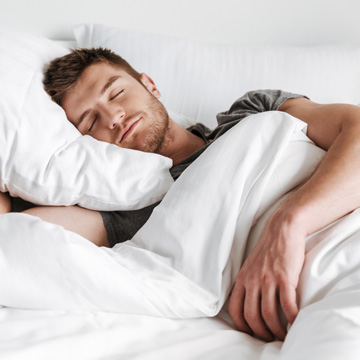
These days, there are many reasons why people lose sleep. From employment concerns, family dynamics, busy schedules, and even the pandemic significantly impact one’s ability to get a restful night’s sleep. However, some individuals suffer from chronic sleep loss due to obstructive sleep apnea (OSA), a sleep-breathing disorder that restricts or completely blocks airflow while sleeping. Unfortunately, untreated sleep apnea leads to chronic fatigue, weight gain, mood swings, and more. It even has an impact on overall health. Therefore, today on the blog, our Beaufort sleep apnea dentist, Dr. Chris Mohler, explains the seriousness of untreated sleep apnea, as well as five quick tips for sleeping better.
Why is sleep apnea a big deal?
Untreated sleep apnea is a big deal because it means your body isn’t getting enough oxygen while sleeping. Imagine for a moment how your body would respond if you didn’t feed it enough or didn’t drink enough water. The effects would be unfavorable and could even result in death. Similarly, depriving your body of the air it needs also has a detrimental impact on your health, including an increased risk of heart attacks, stroke, diabetes, and Alzheimer’s, according to studies. Now, compound those effects over days, weeks, or longer. Since we’ve discussed the seriousness of sleep apnea, here’s how to tell if you have it.
Here’s how to tell if you have sleep apnea
You might have obstructive sleep apnea if you snore while sleeping, although snoring isn’t the only sign. Snoring results from air vibrating as it passes collapsed soft tissue in the airway. You could, however, still have sleep apnea even if you don’t snore. Other symptoms of sleep apnea include chronic fatigue, mood swings, and weight gain, to name a few. The best way to tell if you have sleep apnea is to schedule a consultation with a dentist in Beaufort that offers treatment for sleep apnea. But in the meantime, try these helpful tips and see if your sleep quality improves.
Get enough exercise
Exercise provides multiple benefits to your body, including helping you maintain a healthy heart and slimmer waistline. But it also helps you sleep better. Aim to get at least 30 minutes of moderate exercise daily. This could be by taking walks, jogging, hitting the gym, or working out at home with weights and other workout equipment.
Eat healthy foods
Most people have a skewed assumption of foods that qualify as healthy. To truly be healthy, they shouldn’t come from a package or fast food joint. Instead, healthy food is a diet full of fruits, vegetables, and lean meats. Eat a well-balanced diet by avoiding too much sugar, caffeine, and alcohol, which could interfere with your sleep or cause sleep interruptions.
Stick to a routine
You might assume that you can make up for lost sleep by sleeping in on your days off or on the weekend. But the problem is that irregular sleep patterns do more harm than good, including chronic fatigue and sleep loss. Therefore, sleep experts advise going to bed and waking up at the same time each day, even on your days off, because you can’t really make up lost sleep. Additionally, develop a routine like taking a hot bath and reading before bed every night. That way, your body knows when it’s almost time for some zzzzs.
Relax more often
Stress affects our body in many ways, including impacting sleep. Worrying about daily stressors could make it difficult to fall asleep or stay asleep. Therefore, practice relaxation techniques like yoga or meditation, and avoid stressful conversations or events too close to bedtime. There are other ways to relax if yoga or meditation isn’t for you. Perhaps you like reading, listening to gentle music, or soaking in the bathtub. Just find what works best for you.
Get a sleep apnea screening
If you still struggle with chronic fatigue and sleep loss, consider scheduling a sleep apnea screening near you in Beaufort at Chris Mohler, DDS. We can assess your airway and ask you a series of questions that indicate your sleep apnea risk. We may recommend an official sleep study for an official diagnosis, depending on our findings.
If I have sleep apnea, does that mean I’ll have to use a CPAP machine?
Not necessarily. A CPAP machine is a helpful way of treating sleep apnea as the machine is calibrated to force air into the lungs while sleeping. However, many CPAP users complain about wearing the mask, that it’s noisy and difficult to take with them when traveling. Thankfully, there are alternative treatments for sleep apnea in Beaufort. Dr. Mohler offers oral appliance therapy, which is proven to be effective at allowing proper airflow while sleeping and reducing snoring. Patients also appreciate that wearing a custom oral appliance is comfortable and convenient.
Sleep Apnea Treatment in Beaufort, Bluffton, and Hilton Head
If you’d like to learn more about sleep apnea or schedule a sleep apnea screening near Hilton Head, contact Chris Mohler, DDS, by calling (843) 522-1442 or contact us online today.